

The Golden Thread: Locking Down a Digital Standard of Care Before Your Lead CA Retires

For 30 years, your senior CA Lead has kept complex builds on track using a deeply refined—yet completely unwritten—system of custom Excel logs, personal Outlook folders, and institutional memory. To the firm, it looks like magic. But when that senior lead retires or transitions off a project, the firm inherits a quiet governance crisis: unlinked spreadsheets, lost email trails, and exposed liability. They achieve this using a deeply refined ecosystem of custom Excel tracking logs, highly personalized Outlook folder hierarchies, and an encyclopedia of unwritten rules regarding CCDC compliance.
The Hidden Vulnerabilities of the “Legacy Brain”
When a senior CA Lead retires or steps back, firms rarely lose just a person; they lose an entire proprietary methodology. Without an institutional digital framework to capture how that veteran operated, practices routinely run headfirst into three major structural pitfalls:
1. Broken Spreadsheet Archives and Version Control Chaos
Junior and intermediate staff tasked with taking over project operations usually inherit a labyrinth of legacy spreadsheets. They copy-paste old Excel logs, leading to cascading formula errors, broken RFI linkages, orphaned field reviews, and fractured Change Order tracking. What was once a pristine tracking system becomes a fragile house of cards vulnerable to human error.
2. Fragmented Audit Trails and Siloed Communication
Critical project decisions, contractor directives, and consultant clarifications remain locked away inside individual email threads, local desktop drives, or handwritten field notebooks. When a question arises about why a specific material substitution was approved or how a site instruction was interpreted, the information is trapped in silos rather than mapped to a centralized corporate record.
3. Exposed Long-Term Practice Liability
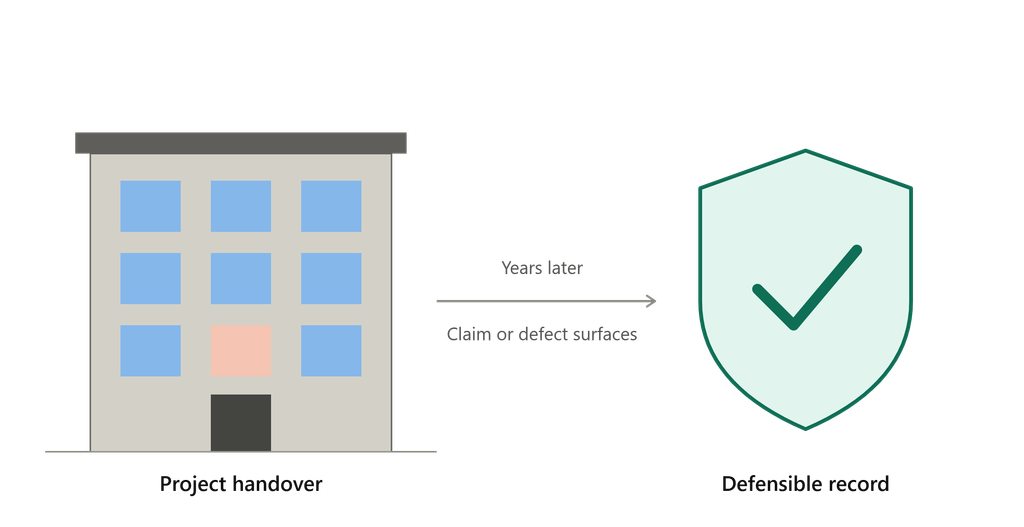
Construction contracts carry long-tail liabilities. If a general contractor files a major delay claim or a latent defect surfaces two or three years after substantial performance and handover, the firm is left scrambling through fragmented, inconsistent historical files. Trying to reconstruct your standard of care and defend your professional integrity under those conditions is an administrative nightmare.
Managing Principal’s CA Liability Stress Test
Question 1: If a contractor files a delay claim 18 months post-handover, can your firm produce an unbroken, independent CCDC audit log without digging through retired staff inboxes?
Question 2: Are your project leads returning to the office after 4:00 PM site visits to spend two hours manually formatting Word and Excel reports?
Question 3: Is your firm relying on the General Contractor’s software platform to maintain the official record of RFIs and Site Instructions, effectively surrendering your independent standard of care?
Moving Beyond Unlinked Spreadsheets
Instead of letting decades of hard-earned CA wisdom walk out the door or disappear into unlinked spreadsheets and local archives, forward-thinking Canadian firms are taking a proactive approach. They are locking their senior standards into a permanent, standardized digital workflow.
This isn’t about replacing human judgment; it’s about institutionalizing the best practices of your top-performing veterans so they scale across the entire studio.
The Standardized “Golden Thread” Standard
By implementing a specialized platform built for Canadian contract administration, firms can digitize their senior team’s unwritten standards today. This gives veteran CAs a faster, cleaner, and less repetitive workflow right now, while simultaneously guaranteeing that junior staff strictly follow a standardized, CCDC-aligned audit trail on every future build.
Here is how modern digital standardization transforms your practice:
- Enforced CCDC Compliance: Platform automation standardizes and auto-formats core documents, including RFIs, Field Review/Site Reports, Submittals, and Change Directives/Orders. This ensures junior leads cannot bypass critical protocol steps or miss contractual notification windows.
- Centralized Studio QA: Managing Principals and Practice Directors gain real-time, high-level oversight across all active builds. You can monitor review turnaround times and field performance without needing to micromanage daily paper trails or chase down individual project managers.
- Permanent Practice Archives: Long after project handovers are complete, the system maintains an immutable, search-ready “Golden Thread” liability record. Every document, response, and sign-off is linked, timestamped, and secured against future disputes.
Future-Proofing Your Practice
The architecture and engineering landscape is evolving rapidly, and client expectations around transparency, speed, and risk management have never been higher. Relying on the personal filing systems of retiring veterans is a gamble no modern firm should have to take.
By digitizing your senior CA standards today, you honor the expertise of your most seasoned leaders while building a resilient, defensible foundation for the next generation of project leads.
Protect your firm’s quality assurance, eliminate generational handoff friction, and streamline project administration across every team lead.
See How Canadian Firms Standardize CA Workflows (Test-Drive RForm)